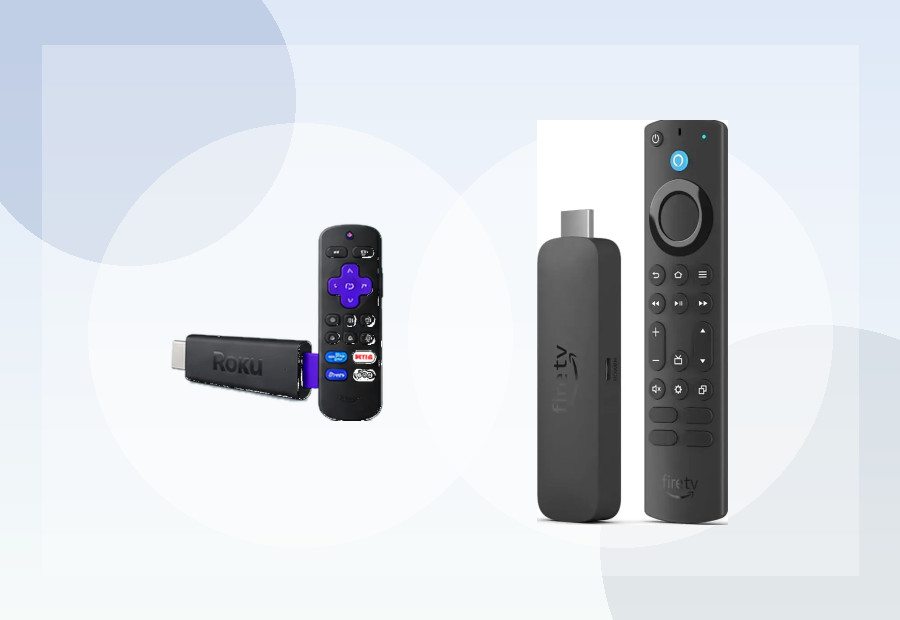
The Roku Streaming Stick Plus and Amazon Fire TV Stick 4K Max target two very different kinds of buyer. Roku focuses on a simple interface and low-clutter setup. Amazon gives you stronger hardware, more storage, Wi-Fi 6E and deeper Alexa integration.
In short: choose Roku Streaming Stick Plus if simplicity and a tidy TV-powered stick matter most. Choose Fire TV Stick 4K Max if you want more storage, Wi-Fi 6E, Dolby Vision and Amazon’s broader feature set.
| Feature | Roku Streaming Stick Plus | Fire TV Stick 4K Max (2nd Gen) |
|---|---|---|
| Resolution | Up to 4K/60 | Up to 4K |
| HDR | HDR10, HDR10+, HLG | Dolby Vision, HDR10, HDR10+, HLG |
| Memory | 1GB listed by Roku developer hardware data | 2GB |
| Storage | Platform-managed; not positioned around local app storage | 16GB |
| Wi-Fi | Dual-band Wi-Fi | Wi-Fi 6E |
| Platform | Roku OS | Fire OS |
| Voice | Roku voice search/control | Alexa |
| Best for | Simplicity | Features and hardware |
Roku wins on simplicity
Roku’s biggest advantage is not a processor number. It is how quickly the interface gets out of your way. Apps are presented in a straightforward grid, and the platform is easier to recommend to people who do not want a content-heavy home screen.
The Streaming Stick Plus is also unusually tidy. Roku says the newer model can power directly from the TV through its USB connection, so there is no separate power brick hanging behind the television in compatible setups.
Fire TV 4K Max wins on hardware headroom
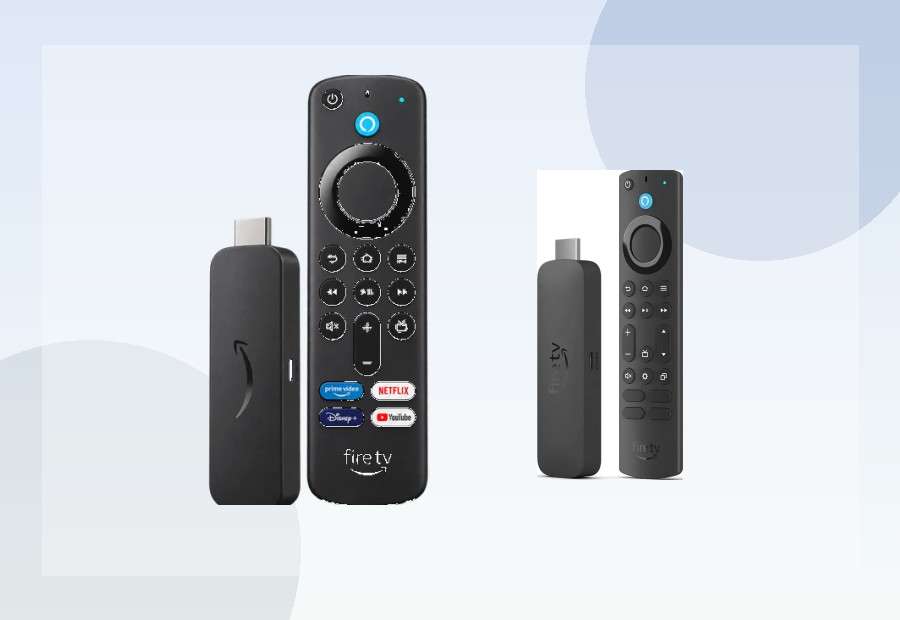
Amazon lists 16GB storage, 2GB memory and Wi-Fi 6E for the second-generation Fire TV Stick 4K Max. That makes it a better fit for people with larger app libraries, newer Wi-Fi 6E routers or a preference for Amazon’s ecosystem.
It also supports Dolby Vision, which the newer Roku Streaming Stick Plus does not. If your TV supports Dolby Vision and you regularly watch compatible content, that difference is meaningful.
Roku OS vs Fire OS
This is the decision that matters most in daily use. Roku is cleaner and more neutral. Fire TV integrates more deeply with Prime Video, Alexa and Amazon recommendations. Neither approach is universally better.
If you are undecided, read our broader Roku vs Fire TV UK platform guide. It covers interface, apps, voice control and the trade-offs beyond these two devices.
Which is better for UK streaming apps?
Both platforms target mainstream streaming use, but app availability can change and some specialist services differ by platform. Check the specific services you use before buying rather than assuming every streaming device supports every UK app forever.
For most buyers, the bigger difference is the interface: Roku is deliberately simple; Fire TV is more feature-rich and Amazon-centric.
Which is better for 4K HDR?
Both are 4K HDR devices. The Fire TV Stick 4K Max has the format advantage because Amazon lists Dolby Vision alongside HDR10, HDR10+ and HLG. Roku lists HDR10, HDR10+ and HLG for the Streaming Stick Plus.
If Dolby Vision is important but you still prefer Roku, the older Roku Streaming Stick 4K remains worth considering.
Which is better for travel?
Roku’s compact TV-powered design is attractive for travel because it reduces the amount of hardware you need to carry. Fire TV is still portable, but the 4K Max normally expects its own power supply. Hotel and public Wi-Fi can also introduce sign-in complications on any streaming device.
Which should you buy?
Buy the Roku Streaming Stick Plus if you want a simple 4K streamer, a cleaner home screen and minimal cable clutter.
Buy the Fire TV Stick 4K Max if you want more storage, stronger wireless hardware, Dolby Vision and deeper Alexa/Amazon integration.
Still unsure? Use the ViewHarbour Device Finder or compare devices directly on the Compare page.