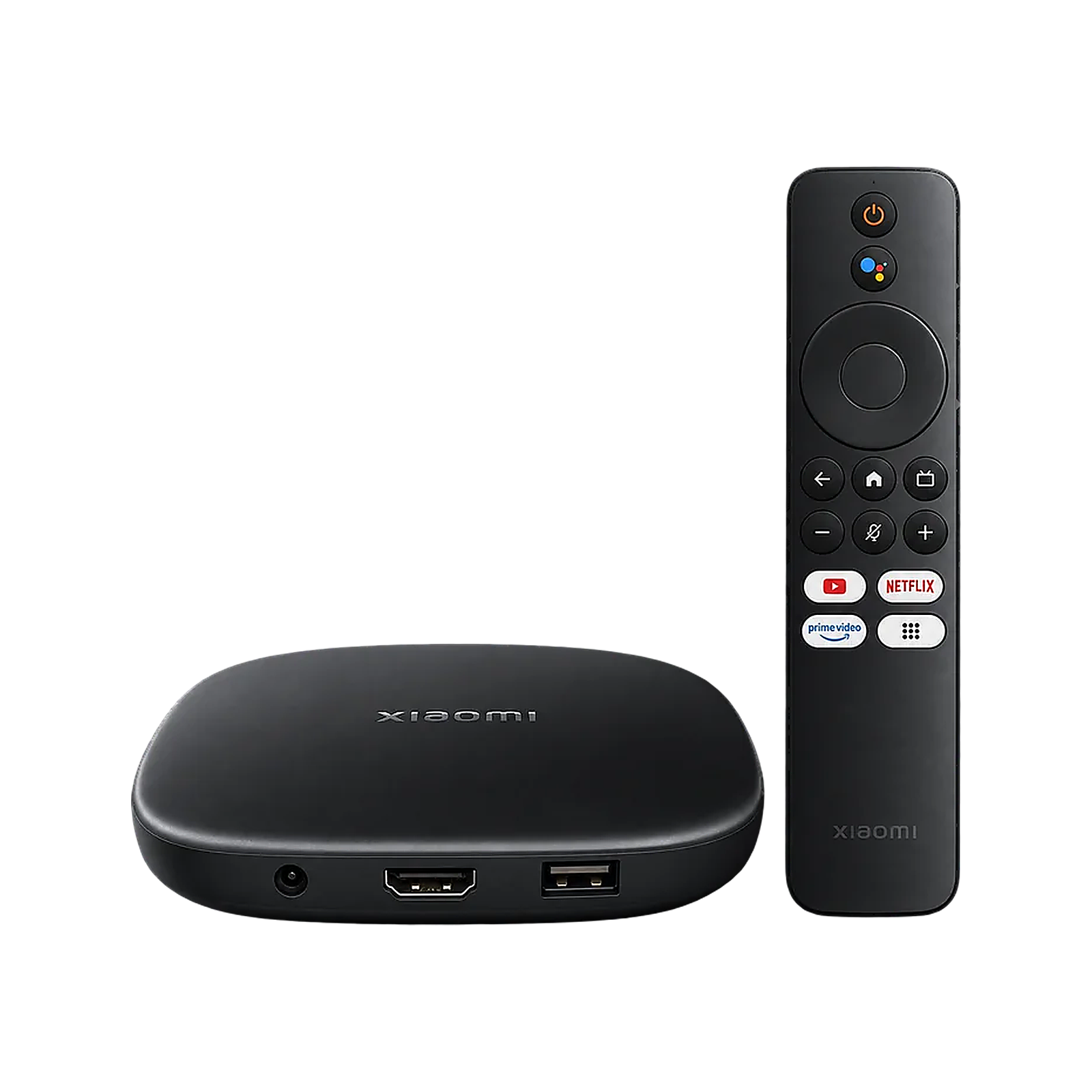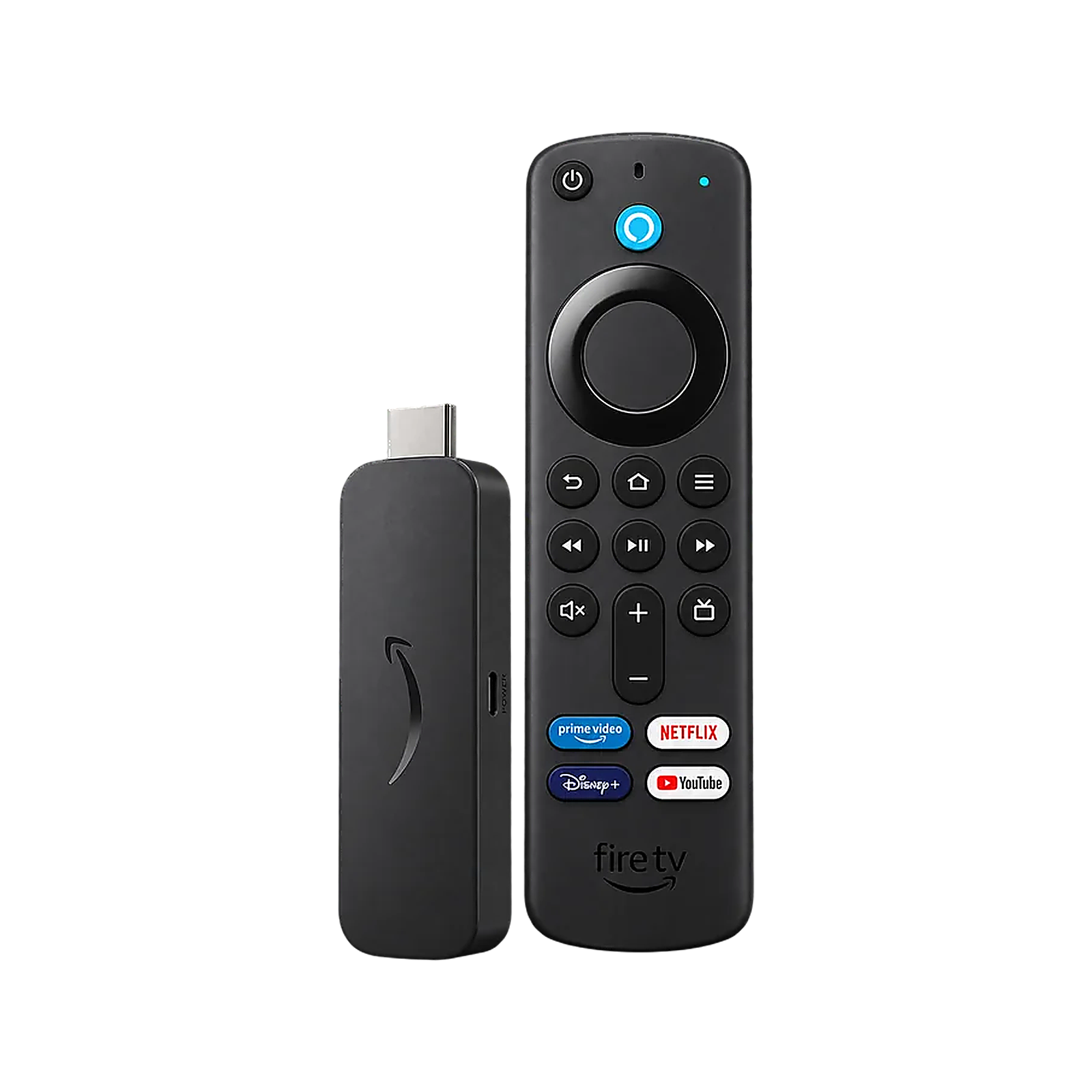
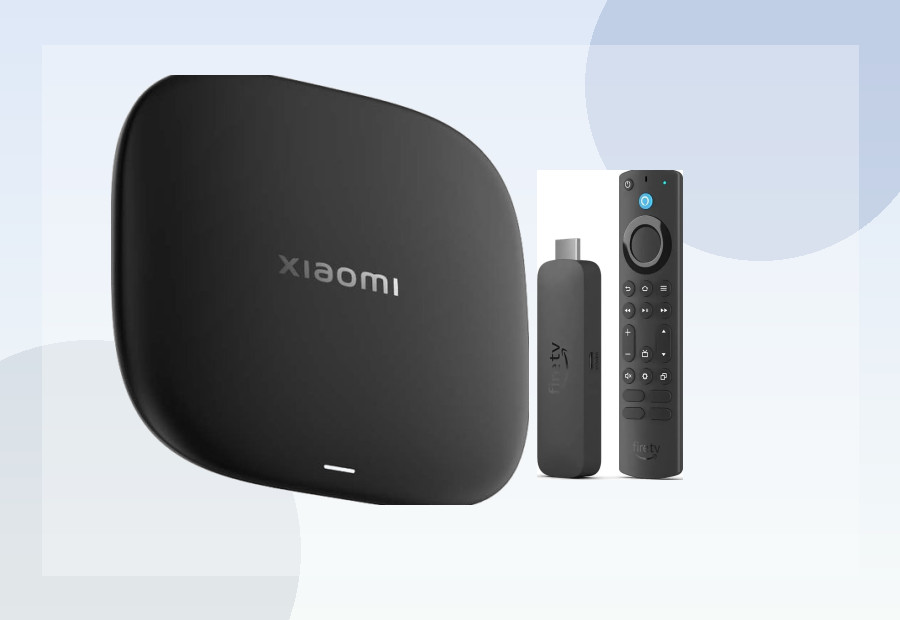
Comparing the Xiaomi TV Box S (3rd Gen) vs Fire TV Stick 4K Max? Xiaomi gives you Google TV, 32GB storage and a full-size USB port; Amazon gives you Fire TV, Wi-Fi 6E and a compact stick that hides behind the television.
If you are comparing Android/Google TV boxes more broadly, see our Best Android TV Box UK guide. You can also open the Xiaomi device page or Fire TV Stick 4K Max device page for catalogue-level specifications.
Xiaomi vs Fire TV: key differences
| Feature | Xiaomi TV Box S (3rd Gen) | Fire TV Stick 4K Max (2nd Gen) |
|---|---|---|
| Interface | Google TV | Fire TV |
| RAM | 2GB | 2GB |
| Storage | 32GB | 16GB |
| 4K | Up to 4K/60 | Up to 4K/60 |
| HDR | Dolby Vision, HDR10+ | Dolby Vision, HDR10+, HDR10, HLG |
| Wi-Fi | Wi-Fi 6 | Wi-Fi 6E |
| Built-in Ethernet | No | No |
| USB | Full-size USB 2.0 | No comparable full-size host port |
| Form factor | Small box | HDMI stick |
1. Storage: Xiaomi has the clearer advantage
Xiaomi specifies 32GB of internal storage, while Amazon lists 16GB for the Fire TV Stick 4K Max (2nd Gen). Neither figure is fully available to the user after system files and updates, but Xiaomi starts with twice the nominal capacity.
That matters if you install a larger app library or simply want more breathing room for updates and cached data. It is one of the main reasons the Xiaomi box remains our value pick.
2. Software: Google TV vs Fire TV
This is less about “better” software and more about which ecosystem you want. Xiaomi runs Google TV, with Google Play, Google Cast and Google Assistant integration. Amazon uses Fire TV with Alexa and the Amazon Appstore.
If your household already uses Echo speakers and Alexa heavily, Fire TV can feel more natural. If you prefer Google TV recommendations, Google Cast and the broader Google ecosystem, Xiaomi is the more obvious fit.
3. Wireless networking: Fire TV wins on the headline spec
Amazon lists Wi-Fi 6E on the Fire TV Stick 4K Max, including the 6GHz band where compatible routers and local conditions allow. Xiaomi uses dual-band Wi-Fi 6 on 2.4GHz and 5GHz.
That gives Fire TV the stronger wireless specification. In practice, streaming reliability still depends on your router, distance, interference and broadband connection, so Wi-Fi 6E alone is not a reason to replace a stable setup.
4. Ports and placement: box vs stick
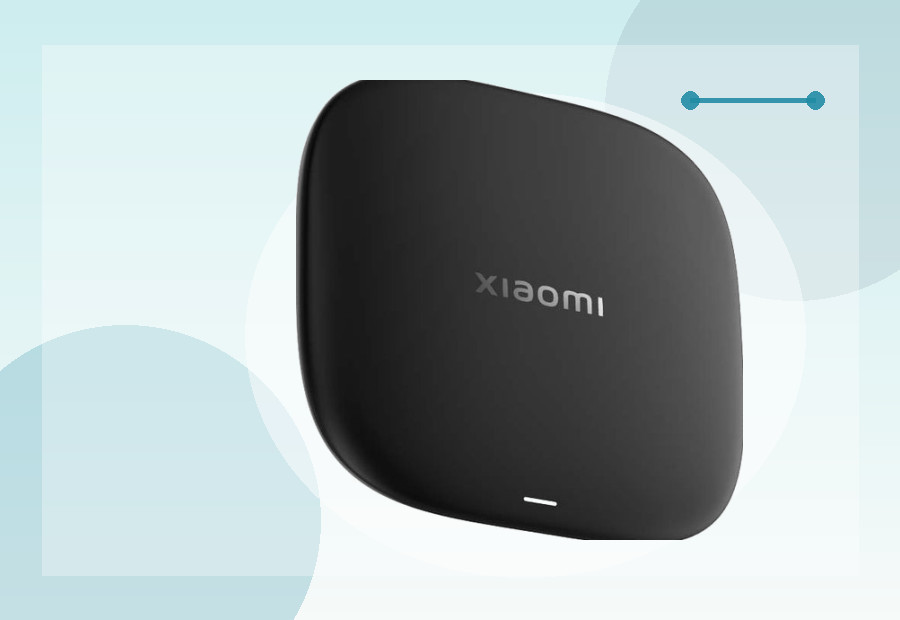
Xiaomi is a small box and includes HDMI 2.1 plus a full-size USB 2.0 port. Amazon’s 4K Max is designed to disappear behind the television, which is tidier but gives you fewer obvious physical connections.
Neither device has built-in Ethernet. Amazon documents wired networking via an external adapter; Xiaomi’s own FAQ says the Box S (3rd Gen) does not support an RJ45 LAN port.
5. Picture and sound
Both are designed for mainstream 4K HDR streaming and both support Dolby Vision and HDR10+. Amazon also lists HDR10 and HLG on the 4K Max. Xiaomi’s current product material highlights Dolby Vision, HDR10+, Dolby Atmos/Dolby Audio and DTS:X support.
Actual HDR and audio output still depends on your TV, sound system, streaming service and the specific programme.
Which should you buy?
Choose Xiaomi for 32GB storage, Google TV and the convenience of a full-size USB port.
Choose Fire TV 4K Max for Wi-Fi 6E, Alexa integration and the smallest hidden setup.
Our current default: Xiaomi for value-focused buyers who do not specifically prefer the Amazon ecosystem.
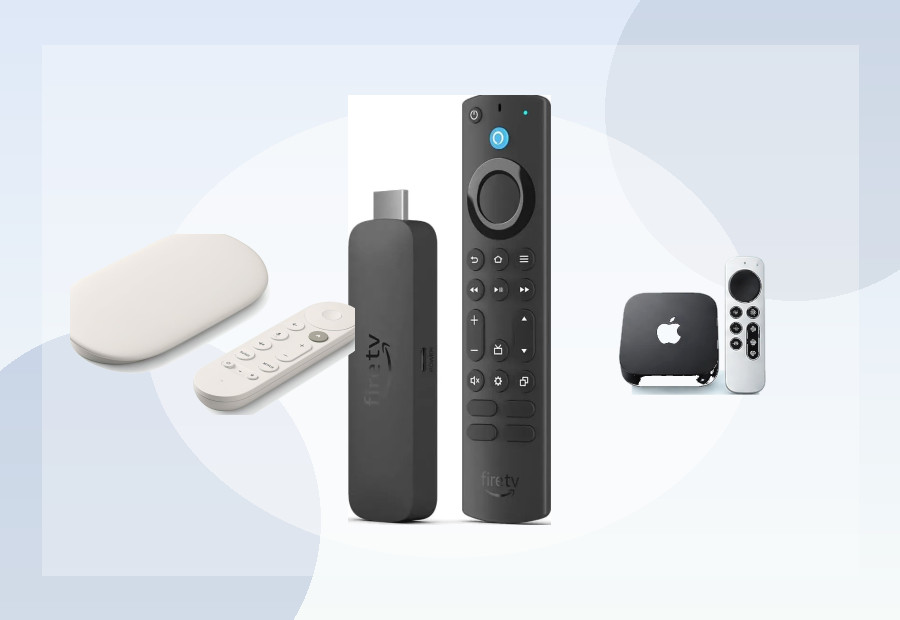
If your decision is specifically between Amazon’s current 4K sticks, see Fire TV Stick 4K Max vs 4K Plus UK. If you are comparing premium Google TV options instead, see Google TV Streamer vs Xiaomi TV Box S (3rd Gen).
Xiaomi TV Box S vs Firestick 4K Max: common questions
Which has more storage?
Xiaomi has the advantage: Xiaomi specifies 32GB, while Amazon lists 16GB for the Fire TV Stick 4K Max (2nd Gen).
Which is better for Wi-Fi?
Fire TV Stick 4K Max has the stronger headline wireless specification because Amazon lists Wi-Fi 6E. Xiaomi lists Wi-Fi 6. Your real-world result still depends heavily on your router and local signal conditions.
Which is better if I want Google TV?
Xiaomi is the clear choice because it runs Google TV. Fire TV Stick 4K Max uses Amazon’s Fire TV interface and Amazon Appstore.
Do either of them have built-in Ethernet?
No. Neither has built-in Ethernet. If wired networking is a priority, compare certified boxes with native Ethernet in our Best Android TV Box UK guide.
Still unsure? Use the ViewHarbour Device Finder to match a streamer to your own TV, budget and priorities.