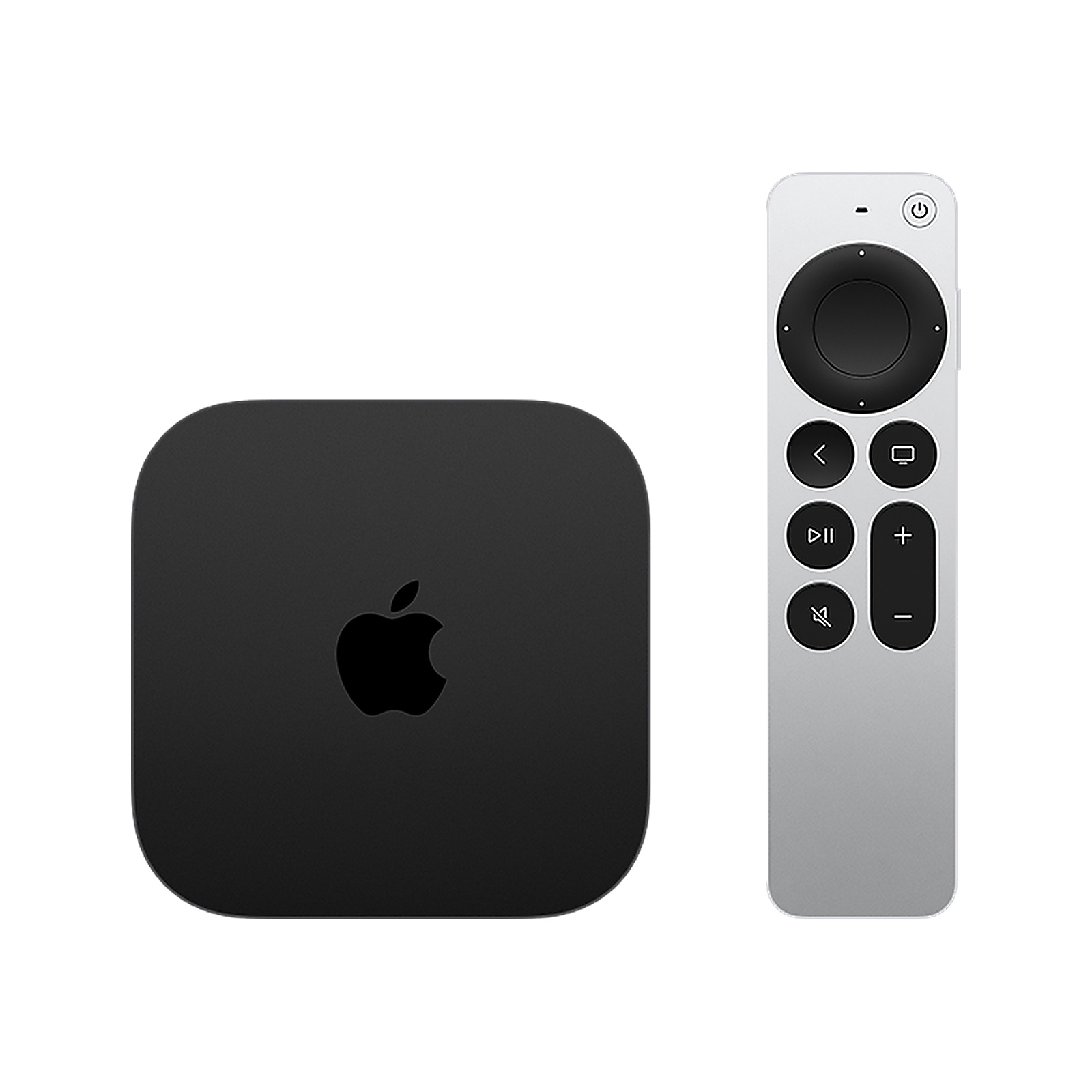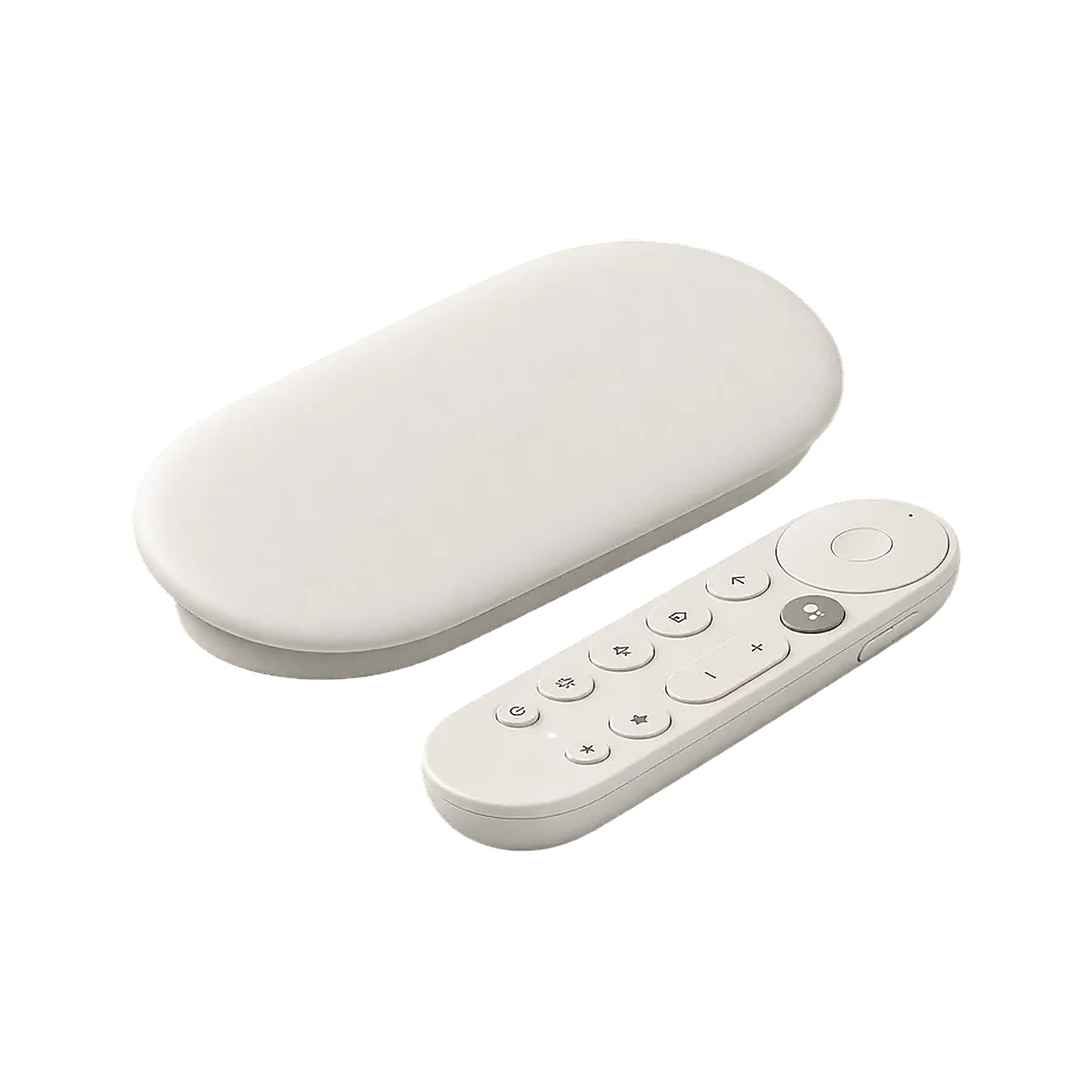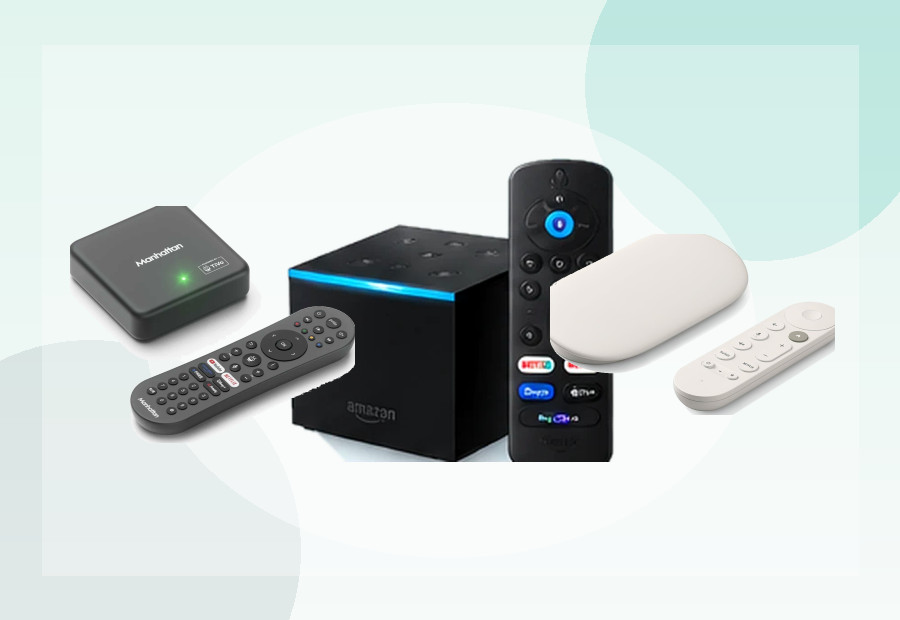
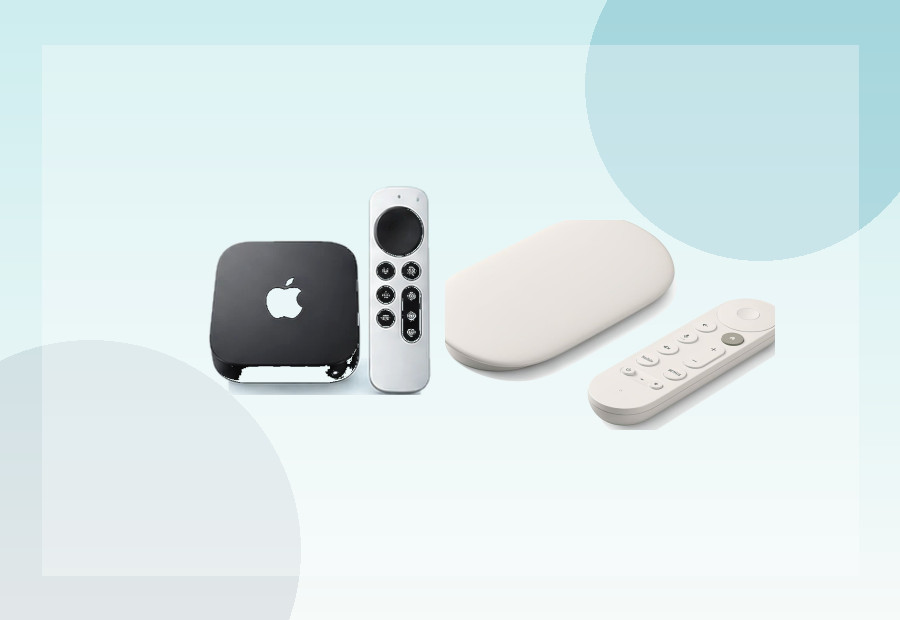
Apple TV 4K and Google TV Streamer sit above the cheapest streaming sticks and aim to be permanent main-TV boxes. Both handle 4K HDR and Dolby Atmos, but their strengths are quite different.
| Feature | Apple TV 4K (3rd Gen) | Google TV Streamer |
|---|---|---|
| Storage | 64GB Wi-Fi / 128GB Wi-Fi + Ethernet | 32GB |
| RAM | Apple does not publish a RAM figure | 4GB |
| Ethernet | Gigabit on 128GB model | Gigabit built in |
| Wi-Fi | Wi-Fi 6 | 802.11ac dual-band |
| HDR | Dolby Vision, HDR10+, HDR | Dolby Vision, HDR10, HDR10+, HLG |
| Smart home | Thread on Ethernet model; HomeKit ecosystem | Matter hub + Thread border router |
| Best for | Apple households / premium tvOS | Google households / Google TV flexibility |
Performance and everyday feel
Apple TV 4K uses Apple’s A15 Bionic chip and is designed around tvOS. Apple does not market it through RAM numbers; the appeal is the fast, highly integrated experience across Apple TV+, Apple Music, AirPlay, iCloud photos and other Apple services.
Google TV Streamer publishes 4GB RAM, which is generous by streaming-device standards and provides extra headroom for the Google TV interface and app switching. If memory figures matter to you, our 2GB vs 4GB RAM guide explains what they mean in practice.
Storage: Apple has much more headroom
Apple offers 64GB on the Wi-Fi model and 128GB on the Wi-Fi + Ethernet version. Google TV Streamer provides 32GB. All are much more comfortable than old 8GB streaming sticks, but Apple has the clear advantage if you install many apps or games.
For context, see our streaming-device storage guide.
Networking
Apple TV 4K supports Wi-Fi 6 on both current models, with Gigabit Ethernet added to the 128GB version. Google TV Streamer includes Gigabit Ethernet as standard but Google’s specification lists dual-band 802.11ac Wi-Fi rather than Wi-Fi 6.
That makes Google particularly attractive if you plan to wire the box to your router, while Apple has the stronger wireless specification on paper.
HDR and audio
Both are strong choices for a modern 4K television. Apple TV 4K supports Dolby Vision and, on the third-generation model, HDR10+. Google lists Dolby Vision, HDR10, HDR10+ and HLG. Both support Dolby Atmos on compatible content and equipment.
Smart-home integration
This comes down to ecosystem. The 128GB Apple TV includes Thread networking and fits naturally into an Apple Home setup. Google TV Streamer includes Matter hub functionality and a Thread border router, making it the more obvious living-room hub for Google Home users.
Apps and platform choice
Apple TV 4K: choose it if your household already uses iPhone, iPad, Mac, AirPods or Apple services. The integration is the product’s biggest advantage.
Google TV Streamer: choose it if you prefer Google TV, use Android phones, cast regularly or want access to Google’s TV app ecosystem.
For a broader platform decision, read Google TV vs Fire TV UK.
Which is better value?
Neither is aimed at the cheapest end of the market. Apple justifies its premium through the A15 chip, storage capacity and Apple ecosystem. Google’s box focuses on 4GB RAM, 32GB storage, Gigabit Ethernet and smart-home integration.
If you mainly want mainstream catch-up and subscription apps, a cheaper Xiaomi, Roku or Fire TV device may be enough. Browse the Best Devices shortlist if premium hardware is not essential.
Which should you buy?
- Choose Apple TV 4K for Apple integration, Wi-Fi 6, high storage capacity and premium tvOS performance.
- Choose Google TV Streamer for Google TV, 4GB RAM, built-in Gigabit Ethernet and Google smart-home features.
- Choose neither if your needs are basic enough for a cheaper streaming stick or box.
For Google’s device in more detail, read our Google TV Streamer review UK. You can also compare models interactively on ViewHarbour Compare.