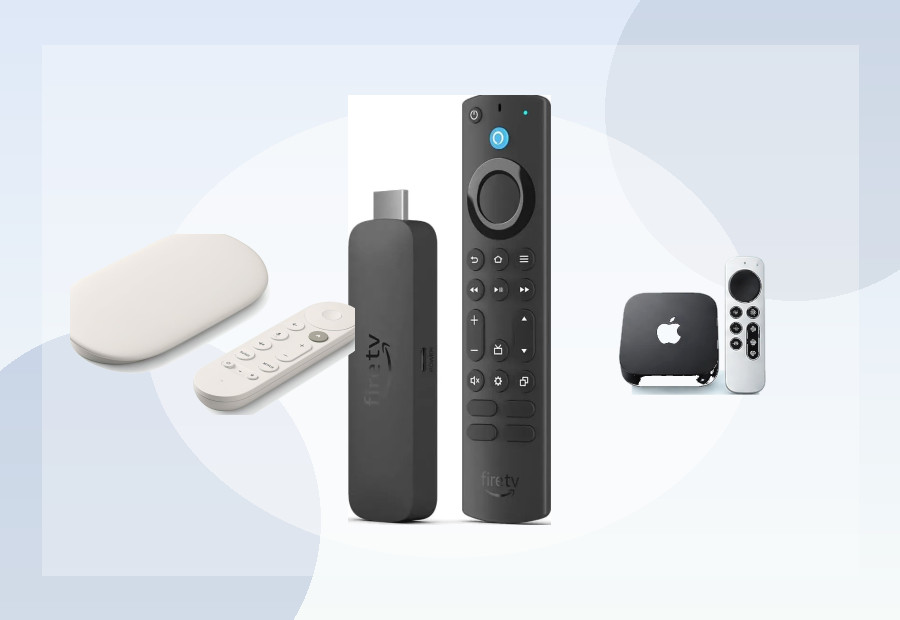
Streaming sticks and streaming boxes can run many of the same apps, but the physical format changes what manufacturers can fit inside. A stick prioritises size and simplicity. A box usually has more room for storage, cooling, ports and wired networking.
In short: buy a stick if you want something cheap, compact and hidden behind the TV. Buy a box if you want more storage, built-in Ethernet, extra ports or higher-end hardware.
| Priority | Streaming stick | Streaming box |
|---|---|---|
| Hidden behind TV | Best | No |
| Travel | Best | Less convenient |
| Storage | Usually lower | Often higher |
| Ethernet | Usually adapter-based or absent | More likely built in |
| USB/extra ports | Limited | More likely |
| Premium hardware | Possible, but constrained | More room for it |
Why choose a streaming stick?
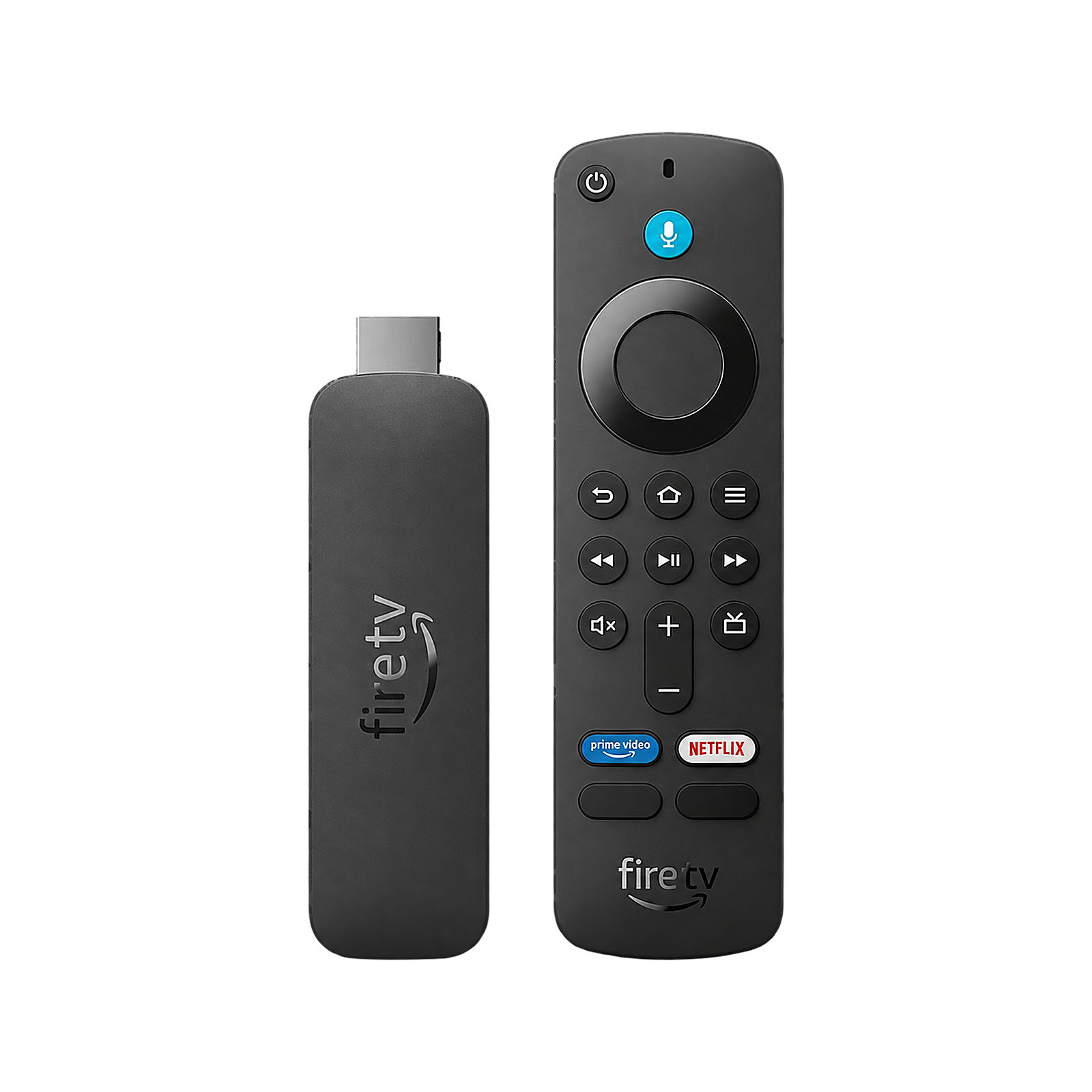
A streaming stick plugs directly into HDMI and disappears behind the television. That makes it ideal for bedrooms, wall-mounted TVs, travel and anyone who wants the least visible setup possible.
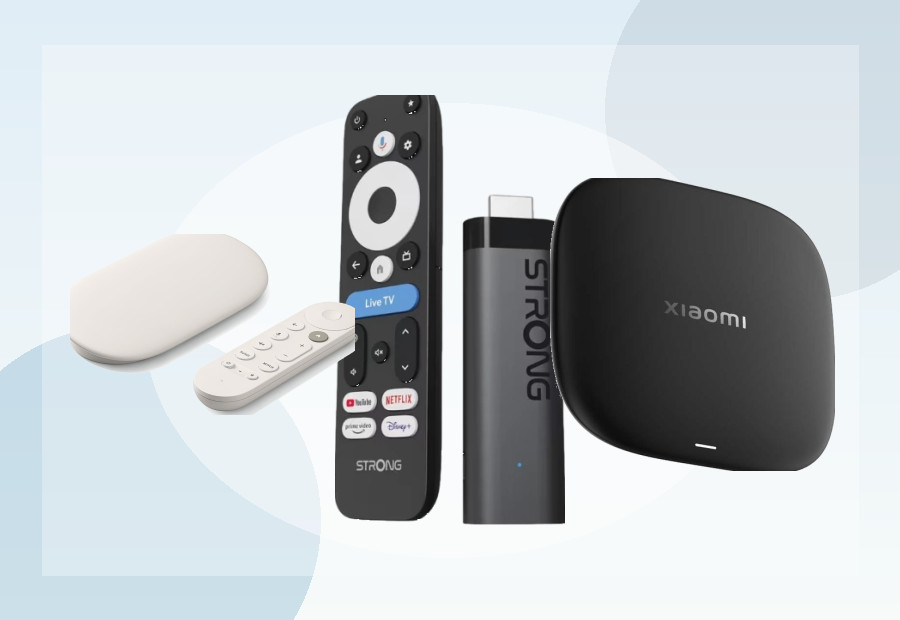
Current examples include the Fire TV Stick range, Roku’s Streaming Stick range and the Xiaomi TV Stick 4K (2nd Gen). They can still provide 4K HDR, voice control and modern Wi-Fi despite their size.
Where sticks compromise
The biggest compromises are usually storage and connectivity. Compact devices have less physical room for full-size USB ports, Ethernet sockets and larger cooling solutions. That does not make them bad streamers; it simply means they are optimised for mainstream app-based viewing.
If storage is a concern, read 8GB vs 16GB vs 32GB: Streaming Device Storage Explained.
Why choose a streaming box?
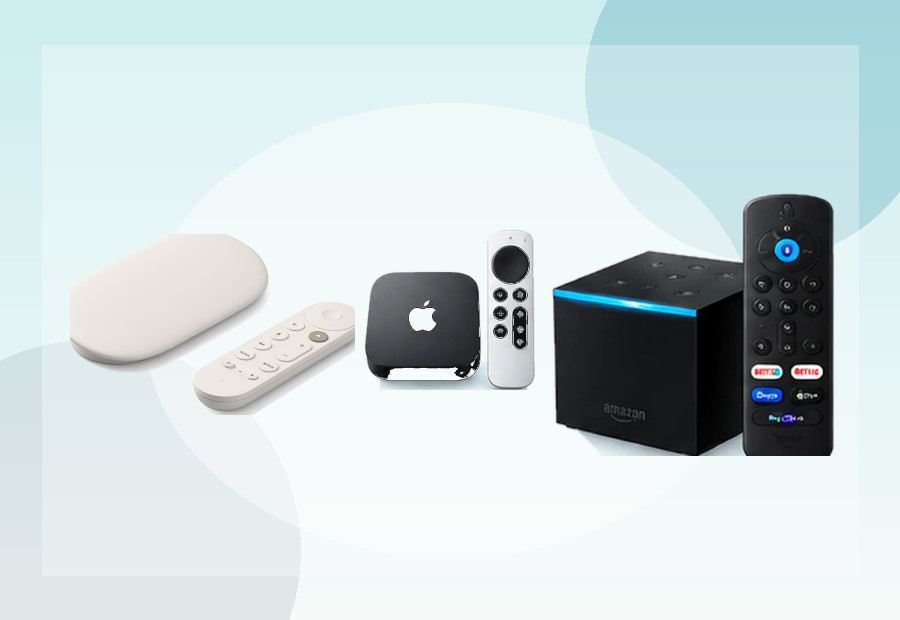
A box sits beside or underneath the TV. The extra space allows manufacturers to include features that are awkward on a stick. The Google TV Streamer, for example, combines 32GB storage, 4GB RAM and built-in Ethernet. Apple TV 4K also uses a box format and, depending on model, can provide higher storage tiers and Ethernet.
Value-focused boxes can benefit too. The Xiaomi TV Box S (3rd Gen) offers 32GB storage and a full-size USB port even though it does not include built-in RJ45 Ethernet.
Does a box stream better picture quality?
Not automatically. A good stick can output the same 4K HDR formats as a box. Picture quality depends on the device’s supported codecs and HDR formats, the streaming service, your internet connection and the television itself.
The box advantage is more about hardware headroom and connectivity than an automatic picture-quality improvement.
What about Ethernet?
If you know you want a wired connection, a box is usually easier. Some sticks can use Ethernet adapters, but that adds cables and can reduce the appeal of the compact form factor. Our Best Streaming Device with Ethernet UK guide covers the strongest built-in options.
Which is better for travel?
Sticks win. They are lighter, easier to pack and often plug straight into a hotel or holiday-rental TV. Just remember that captive-portal Wi-Fi and hotel network restrictions can affect setup regardless of the device.
Which is better for a main living-room TV?
If this is the television you use every day and you expect to install a large app library, keep the device for years, use Ethernet or connect accessories, a box is easier to justify. If you mainly open a handful of streaming apps, a stick can be all you need.
ViewHarbour recommendation
Choose a stick when simplicity, price, portability and hiding the hardware matter most.
Choose a box when storage, Ethernet, ports and long-term hardware headroom matter more than compactness.
If you still cannot decide, use the Device Finder. It asks about the things that actually affect the choice rather than assuming one form factor is better for everyone.